“coffee tree distribution” search results (2000)

Medium alcohol Tanzanian coffee Flavor Taste Manor Features Fine coffee Introduction
Tanzania's eastern coastal areas and inland parts of the lowlands belong to the savanna climate, the western inland plateau belongs to the tropical mountain climate, most of the average temperature of 21-25℃. More than 20 islands of Zanzibar have a tropical maritime climate, hot and humid all year round, with an average annual temperature of 26℃. [6]Rainfall types are divided into bimodal distribution and unimodal distribution. Areas with bi-modal rainfall include
2016-08-17 medium alcohol tanzania coffee flavor taste estate region characteristics fine
Common Coffee Tree Diseases and pests and Control methods in Coffee planting
1. Coffee tiger longicorn beetles are distributed in all coffee producing areas in the world, and also occur in Yunnan, Guangxi and Hainan Island in China. It is one of the major pests of coffee. The coffee tiger longicorn beetle harms the coffee trunk for more than 2 years. At first, it eats between the cambium and xylem, and then eats the xylem. The victim was a curved tunnel filled with sawdust, which had a great impact on coffee.
2015-03-23 Coffee common sense planting common diseases and pests control methods coffee longicorn beetles the world
History of coffee beans Coffee civilization departure
Legend has it that around the 10th century AD, on the Ethiopian plateau in Africa, there was a shepherd named Carl who discovered that his sheep were excited after eating some kind of red fruit. Carl then distributed the magical red fruit to the locals, and its magical effects spread. Picture 1 Red fruit on coffee tree Another legend dates to AD 1258, when it was also
2016-05-27 coffee beans history coffee civilization departure legend AD tenth century before and after non
Pure flavor, rich and refreshing Tanzania Kilimanjaro coffee taste manor area introduction
The types of rainfall can be divided into bimodal distribution and unimodal distribution. The areas with double bee rainfall include the provinces around the Lake Victoria basin, the northeast highlands, the coastal and inland northeastern. The bimodal rainfall area is characterized by two rainy seasons. The short rainy season occurs from September to December. The total rainfall can reach 200-500 mm. The long rainy season occurs from March to May.
2016-08-30 Flavor pure full-bodied refreshing Tanzania Kili Mazar Luo coffee coffee
Where is the basic knowledge of boutique coffee?
Coffee trees grow in tropical or subtropical agricultural gardens centered around the equator and called coffee belts. Most of the coffee production is between the Tropic of Cancer, 25 degrees north of the tropical or subtropical equator and 30 degrees south of the equator. An area with an annual average temperature of 16-25 degrees Celsius, no Frosts Descent and rainfall of 1600-2000 mm. At present, coffee is mainly produced by seven countries.
2015-03-04 Boutique coffee basic knowledge where tree grow equator center
Introduction to the flavor and taste characteristics of Arusha Coffee Manor in Tanzania
The interior of Tanganyika was placed under the German sphere of influence in 1886, the whole territory of Tanganyika was occupied by British forces in November 1917, and became a British mandate in 1920. In 1946, the United Nations General Assembly adopted a resolution to change it into a British trusteeship. Tanzania achieved internal autonomy on May 1, 1961. Independence was declared on December 9 of the same year, and the establishment of the Tanganyika Republic in early 2010 led to new developments in the political reconciliation of Sang Island.
2016-08-24 Fragrance complement each other Tanzania Arusha coffee manor flavor taste special
Introduction of Costa Rican Coffee Variety producing area Flavor and Fine Coffee Bean Manor
Costa Rica is located in the Central American isthmus, belonging to North America, 10 north latitude, 84 west longitude. It is bordered by the Caribbean Sea to the east and the North Pacific Ocean to the west, with a coastline of 1290 km (212km on the east coast and 1016 km on the west coast). Costa Rica borders Nicaragua in the north (309 km long border) and Panama (639 km long border) south-southeast. Total
2016-09-22 Costa Rica coffee variety producing area flavor taste boutique coffee beans manor
Introduction of Coffee beans in Costa Rican Coffee Variety producing area
Costa Rica is located in the Central American isthmus, belonging to North America, 10 north latitude, 84 west longitude. It is bordered by the Caribbean Sea to the east and the North Pacific Ocean to the west, with a coastline of 1290 km (212km on the east coast and 1016 km on the west coast). Costa Rica borders Nicaragua in the north (309 km long border) and Panama (639 km long border) south-southeast. Total
2016-09-21 Costa Rica coffee variety producing area flavor taste boutique coffee beans introduction
Costa Rica Goddess Manor introduces Coffee Variety producing area Manor
Costa Rica is located in the Central American isthmus, belonging to North America, 10 north latitude, 84 west longitude. It is bordered by the Caribbean Sea to the east and the North Pacific Ocean to the west, with a coastline of 1290 km (212km on the east coast and 1016 km on the west coast). Costa Rica borders Nicaragua in the north (309 km long border) and Panama (639 km long border) south-southeast. Total
2016-09-22 Costa Rica Goddess Manor introduction Coffee Variety producing area
Introduction to the characteristics of flavor and taste in the producing area of Costa Rica San Roman Coffee Manor
The seven provinces are: Alajuela Alajuela (central, northwest of San Jose), Catago Cartago (central, east of San Jose), Guanacaster Guanacaste (northwest), Eredia Heredia (central, north of San Jose), Limon Limn (east, along the Caribbean), Pentalenas Puntarenas (west, along the Pacific Ocean), San Jose San
2016-09-02 Taste mellow Costa Rica Roman coffee manor producing area flavor characteristics
Which countries and regions can grow coffee? Why? Where does coffee come from? Coffee
Since coffee trees are tropical plants, they need to be planted in warm places. The main planting area is distributed between latitude 25 south and latitude 25 north with the equator as the center, so this area is also called the coffee belt. However, even in the coffee belt, Arabica and Robeska do not grow in exactly the same area, but grow up in an environment that is more suitable for their own growth.
2016-03-18 Which country region talent cultivation coffee why where produce
The basic altitude of coffee planting technology is the most suitable for planting.
Coffee planting technology the origin of coffee trees is in Ethiopia, Africa. In botany, coffee trees belong to the evergreen trees of the subgenus Rubiaceae, and coffee beans, commonly known as coffee beans, are the seeds of the fruit of coffee trees, just because they are shaped like beans, so they are called coffee beans. Climate is the decisive factor for coffee cultivation. Coffee trees are only suitable for growing in the tropics or subtropics.
2016-10-19 Coffee planting technology basic altitude how much suitable coffee
Flavors Clear Costa Rica San Román Coffee Estate Flavors Taste Features
Of the six general elections held between 1953 and 1978, the National Liberation Party won four. During the party's administration, it emphasized state intervention in the economy, nationalized some industries, raised import taxes to protect national industries, forced the United Fruit Company to increase income taxes; strengthened relations with other Latin American countries and Western Europe, and changed its dependence on the United States. It joined the Central American Common Market in 1963 for 70 years.
2016-08-26 Flavor Clarity Costa Rica Romance Coffee Manor Region Taste Characteristics
Talking about Coffee beans
1. Summary: coffee is a perennial evergreen shrub or small tree of Rubiaceae. It is native to tropical Africa and has been cultivated for more than 2000 years. The Arabs began to grow coffee in 525 BC, and it was popular for Arabs to stir-fry coffee beans. They began to grow coffee beans on a large scale after the 15th century, and were widely distributed in the tropics and subtropics of Europe, Asia, Africa and Latin America after the 18th century.
2014-07-02 Coffee beans coffee bean history coffee bean uses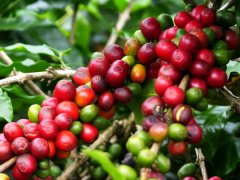
Which countries and regions can grow coffee? What conditions do you need to grow coffee?
Since coffee trees are tropical plants, they need to be planted in warm places. The main planting area is distributed between latitude 25 south and latitude 25 north with the equator as the center, so this area is also called the coffee belt. However, even in the coffee belt, Arabica and Robeska do not grow in exactly the same area, but grow up in an environment that is more suitable for their own growth.
2015-10-20 Which countries regions talents cultivation coffee needs what conditions due to
Coffee basics how much do you know about coffee beans
Coffee beans grow in tropical or subtropical agricultural gardens around the equator, called coffee belts, and travel to Japan with ships. When the brown coffee beans appear in front of your eyes, they have actually gone through a variety of different circulation processes and the hands of many people. Coffee is widely distributed in South America, Central America, the West Indies, Asia, Africa, Arabia, the South Pacific and
2015-01-19 Coffee basics common sense about coffee beans know how much coffee beans are longer than red
Introduction to the basic knowledge of Fine Coffee
First, the planting and regional distribution of coffee trees. Botanically, coffee trees belong to the subgenus Rubiaceae, but coffee beans, commonly known as coffee beans, are actually the seeds of the fruit of coffee trees, just because they are shaped like beans, so they are called coffee beans. Climate is the decisive factor for coffee cultivation. Coffee trees are only suitable for growing in the tropics or subtropics, so the latitude between south and north is between 25 degrees.
2015-04-22 Boutique coffee basics common sense introduction planting region distribution botany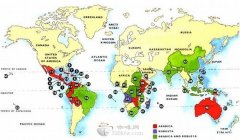
Coffee beans grow at the center of the equator
Coffee beans grow in tropical or subtropical agricultural gardens around the equator, called coffee belts, and travel to Japan with ships. When the brown coffee beans appear in front of your eyes, they have actually gone through a variety of different circulation processes and the hands of many people.
2014-08-19 Coffee knowledge coffee bean growth coffee belt equatorial growth
The History of Coffee beans how Coffee flows into China
Legend has it that around the tenth century AD, on the Ethiopian plateau of Africa, a shepherd Carl found sheep excited after eating some kind of red fruit. As a result, Carl distributed this incredible red fruit to the locals, and its magical effect spread. Photo 1 there is another legend about the red fruit on the coffee tree in 1258 AD.
2016-05-26 Coffee beans history coffee how inflow China legend AD 10th century before
The planting system of Ethiopian coffee is roughly divided into four types.
The planting system of Ethiopian coffee is roughly divided into four categories: 1) primeval forest coffee (Forest Coffee:8-10%) 2) semi-virgin forest coffee (Semi-forest Coffee: 30-35%) 3) Manor coffee (Garden/Cottage: 50% mae 55%) 4) Enterprise coffee cultivation (Plantation Coffee: 5-6%) specifically: primeval forest coffee belongs to the category
2014-08-13 Coffee knowledge Ethiopia coffee cultivation planting system